Inside EP1: from motor torque to useful thrust
Why we develop the axial-flux motor, shaftless rotor, blades and control as one propulsion system.
A marine vehicle needs useful thrust in water. Producing torque at the motor is one part of that job.
With EP1, we develop axial-flux motor architecture, shaftless rim drive and dedicated control together. The question behind that work is practical: how does the propulsion system support the vehicle's mission without consuming unnecessary weight, space or energy?
A short motor profile
In an axial-flux motor, the principal magnetic field crosses the active gap along the rotation axis. This arrangement supports a disc-like form with a short axial profile.
We develop that geometry around the propeller's torque and speed requirements. For a marine robot, the packaging decision also affects the space available for batteries, sensors and task equipment.
Drive at the rim
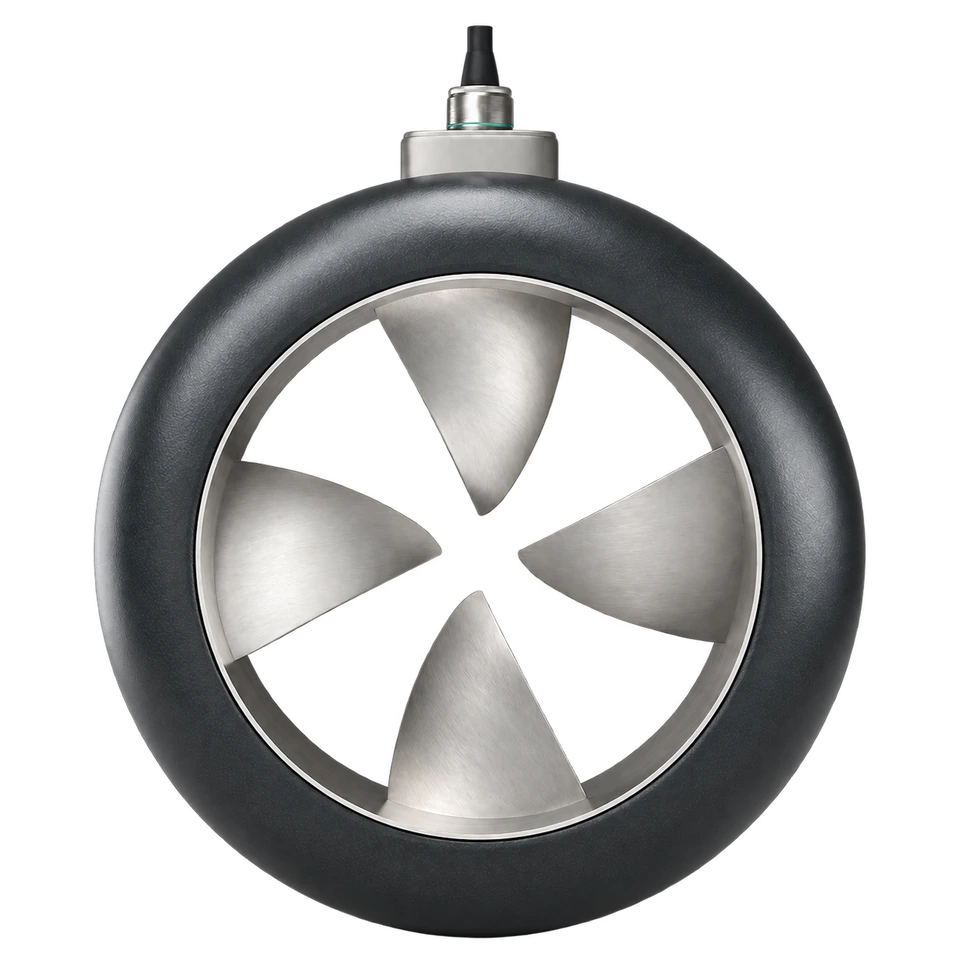
EP1 drives the blade-carrying rotor at its outer rim. A central drive shaft does not pass through the propulsion opening.
Removing that shaft removes a central wrapping point for line and weed. The surrounding opening, rotor clearances and support structure still form part of the debris-handling design. We consider those together around the intended operating environment.
Quietness runs through the system
Underwater sound has several sources. Electromagnetic forces, rotating structures, bearings and the interaction between blades and water all contribute.
Our coreless-motor work addresses cogging torque at the motor. Dedicated control and blade development address other parts of the chain. Quietness is therefore a system-level design task, alongside useful thrust and installed weight.
Match the propulsion to the work
Cruising, holding position and working against a surface place different demands on propulsion. We develop motor, blades and control around those duties rather than treating electrical input as the result on its own.